Author: Virginia Macholl
When I decided to write about Lila Abu-Lughod’s text, Writing against Culture, the main reason that made my mind was that it is a text about minorities. And the minorities are women and so-called “halfies”—with “halfies” being a term used in reference to people “[…] whose national or cultural identity is mixed by virtue of migration, overseas education, or parentage”[1] (“split selves”[2]). Her text corresponds with my academic interests, because since I started to study ethnology, I have learned and read more and more about cultural inequalities and gender studies. Consequently, I hoped to learn even more from her writing. And I wasn’t disappointed.
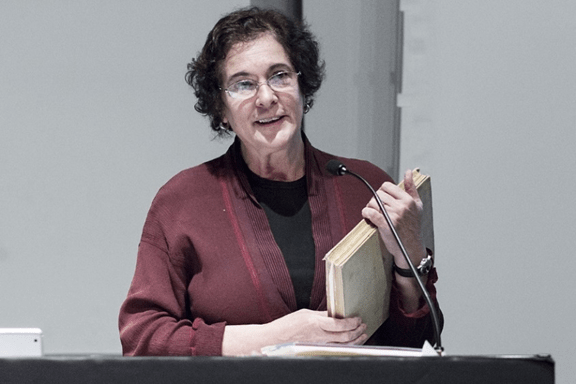
Lila Abu-Lughod writes from her personal experience. Although I haven’t seen any emotional influences in the text, one can learn from her biography that the author is a “halfie” too—half-Palestinian and half-American—and that she’s a woman. She writes that “halfie” anthropologists have trouble distinguishing between speaking “for” and speaking “from”, and that’s because of their “split selves”[3] (especially when it comes to making something like a border between an anthropologist and the Other). I can see that nowadays scholars try to break this order and study the social groups from which they come.
The text Writing against Culture is a chapter from a book titled Recapturing Anthropology: Working in the Present [4] which was first published in 1996. But it’s a universal text that will never be out of date. In my essay, I focus on how being a “halfie” can affect future research and writing, but I also briefly write about some other important issues that are described by Abu-Lughod.
As an unconventional and openly arguing response to James Clifford and George E. Marcus’ book Writing Culture (1986), the text concentrates on three aspects:
- The notion of positionality (which is constituted through our relations with others—so our identification is relational or maybe even fluid; what is more, positionality has an influence on the knowledge we gain and share—our identification, background, and institutional affiliations give us a baggage of experience, and it has an impact on our works);
- A question of power (the power of me – an ethnologist who conducts fieldwork, and/or the power of my respondents; plus, Abu-Lughod writes that power is inherent in the distinction between the self and the Other, and in her opinion, that’s violence – violence of repressing or ignoring other forms of difference [5]);
- And her criticism of “writing culture” (instead of “writing about cultures,” she suggests studying existing discourses and practices – and paying attention to the “ethnographies of the particular” [6] – it means it’s important to know every group or society consists of persons and their relationships with each other).
What is essential, every one of these aspects must confront the fact that there is no culture in this world that is “frozen in time” – all “cultures” have a tendency to change and evolve constantly. Nevertheless, ethnology used to “freeze” them in time as something that remains still. Abu-Lughod says that the researchers should be more attentive and describe societies as evolving.
Moreover, the author points out two minority groups I have written about before – women and “halfies” – and she finds them the most vulnerable to inequality and discrimination [7]. But these minorities are not homogeneous. For example, women are divided into many smaller groups concentrating on aspects that make them different, such as religion, sexual orientation, being a feminist or not… I suppose that a straight religious woman probably sees the world in a different way than a lesbian atheist. The author indicates that feminists used to write about “women’s culture”, but women are not all the same. She emphasizes that we shouldn’t make generalizations; the differences are what anthropology studies.
Moving to “halfies” – the people who don’t belong to any cultural/ethnic group fully – there are many issues when a “halfie” studies a group or a case with whom they feel a cultural connection (I think that it can be an emotional connection as well). Abu-Lughod says that it’s important to remember not to put our views above the things that our respondents tell us. The ethnologists should be careful with facts (e. g. historical). As an example, I can summon an (un)famous debate between Marshall Sahlins and Gananath Obeyesekere (when the second of them is a “halfie” and he tried to change anthropological views on the cause of James Cook’s death in the Hawaiian Islands in 1779). Obeyesekere argued with the opinion that native Hawaiians believed Cook to be Lono (a Polynesian god of fertility, agriculture, rainfall, music, and peace), while Sahlins claimed that’s highly possible. Historically, Cook was killed by the native Hawaiians, but the cause of his death was kind of an open question. So, both of the scholars mentioned have published works to prove their opinions. Obeyesekere wrote about European mythmaking and a tendency to call the Hawaiians “primitive” and “irrational” [8]. In contrast to that, Sahlins tried to explain that there are many types of rationality and, in fact, studying a non-Western society from a Western point of view is a kind of eurocentrism[9]. Their debate has become symbolic and has raised the question: Can a Western scholar understand non-Western people?[10] And: how to decide – if it’s even possible – who can speak for whom?[11] It also shows how background (parentage, education…) can influence an anthropologist’s perspective and their writings. In conclusion, none of the mentioned anthropologists was absolutely right; there is not the one and only right point of view on any anthropological case, and it depends on the scholars how they tend to describe it. I think the way we write about the case is the highest risk we take as future writers.
My two dissertations are focused on Polynesian mythology. I mentioned in them many scholars who are “halfies”, but the example of the debate on Cook’s death is the one I vividly remember from the course I got at my first year of studying ethnology. And, finally, it shows the importance of positionality and how the way we see the world and the Others can have an impact on our anthropological writings. So, finding our point of view as the only right is a dangerous mistake.
Back to Abu-Lughod’s text, she writes that anthropologists, including both: feminists and “halfies”, should be aware that they will have to face politics and the ethics of their representations (there is a high possibility it will not be easy to publish their writings). Moreover, ethnographic research has to be focused on people, on individual lives, and on particular case studies – and that means no homogeneity and no timelessness. That can help to avoid stereotypes and generalizations, and that’s what the author calls “tactical humanism”[12].
Lila Abu-Lughod’s work clearly contributes to the literature on anthropological practice, including doing fieldwork, making fieldnotes, and writing about our studies. I think that this anthropologist successfully points out what’s very important (or even crucial) in fieldwork and future writing. Her text can be helpful for every young ethnologist – no matter what kind of ethnology they study, because it sheds new light on aspects of anthropological practice that are significant but have remained rather unnoticed.
Bibliography:
- Abu-Lughod, Lila, Writing against culture, pp. 137-162 in: Richard G. Fox (ed.), Recapturing Anthropology: Working in the Present, School of American Research Press, Santa Fe 1996
- Borofsky, Robert, Cook, Lono, Obeyesekere, and Sahlins: CA Forum on Theory in Anthropology, pp. 255-282 in: “Current Anthropology”, Vol. 38, No. 2, The University of Chicago Press on behalf of Wenner-Gren Foundation for Anthropological Research, Chicago 1997
- Obeyesekere, Gananath, The Apotheosis of Capitain Cook. European Mythmaking in the Pacific, Princeton University Press, Princeton 1997
- Sahlins, Marshall, How “Natives” Think: About Captain Cook, for Example, University of Chicago Press, Chicago 1995
Key words: anthropology, culture, culture changes, cultural studies, ethnography, ethnology, feminism, fieldwork, gender studies, “halfies”, identification, positionality, self-identification, women’s studies
[1] Abu-Lughod, Lila, Writing against culture, pp. 137-162 in: Richard G. Fox (ed.), Recapturing Anthropology: Working in the Present, School of American Research Press, Santa Fe 1996, p. 137.
[2] Ibidem, p. 140.
[3] Ibidem, p. 143.
[4] See: Richard G. Fox (ed.), Recapturing Anthropology: Working in the Present, School of American Research Press, Santa Fe 1996.
[5] Ibidem, p. 140. See also: „[…] the danger of treating selves and others as givens”, p. 139.
[6] „By focusing closely on particular individuals and their changing relationships, one would necessarily subvert the most problematic connotations of culture: homogeneity, coherence, and timelessness.”, Ibidem, p. 154.
[7] What else these groups share is the issue I mentioned about before: “split selves”. As Abu-Lughod writes: “For both, although in different ways, the self is split, caught at the intersection of systems of difference.” (Ibidem, p. 140) . So, I understand that this way: it’s not easy to be a “halfie” and/or a woman and studying anthropology simultaneously.
[8] See: Obeyesekere, Gananath, The Apotheosis of Capitain Cook. European Mythmaking in the Pacific, Princeton University Press, Princeton 1997.
[9] See: Sahlins, Marshall, How „Natives” Think: About Captain Cook, for Example, University of Chicago Press, Chicago 1995.
[10] „The right of Western anthropologists to translate or speak for others is very much under attack.”, says Robert Borofsky. See: Borofsky, Robert, Cook, Lono, Obeyesekere, and Sahlins: CA Forum on Theory in Anthropology, pp. 255-282 in: “Current Anthropology”, Vol. 38, No. 2, The University of Chicago Press on behalf of Wenner-Gren Foundation for Anthropological Research, Chicago 1997, p. 263.
[11] As Robert Borofsky asks: „What does a person need to know – to experience or learn – in order to possess such authority? Obeyesekere feels he can understand earlier Hawaiians through an intensive examination of ethnohistorical sources […]. Sahlins feels he can understand them from more than two decades of ethnohistorical investigation.”, Ibidem, p. 263.
[12] Ibidem, p. 157-159.
 Anthropological Perspectives
Leave a comment